 +44 (0)1271 375197


Why complex equipment needs more than standard protective packaging
Standard protective packaging has a useful role in many applications, particularly where the product is relatively straightforward, the route to market is predictable and the risks are well understood. However, complex equipment often brings together a very different set of requirements, where size, value, sensitivity, handling, access and operational readiness all need to be considered at the same time. In these cases, the packaging has to do more than contain the equipment; it has to form part of the wider protection and handling strategy.
For customers working in defence, space, aerospace, offshore and technical industrial markets, the equipment being transported may often be fragile, heavy, awkwardly balanced or mission critical (and occasionally all). It may be moving between manufacturing sites, test facilities, launch locations, vessels, operational bases or end-user environments. Each stage introduces potential risk, from vibration and shock to moisture, contamination, poor handling, movement in transit or damage during loading and unloading.
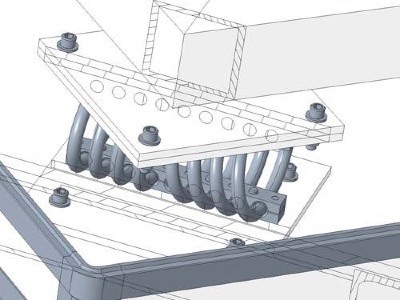
This is why standard packaging is not always enough. A rugged case may provide a strong outer shell, but the wider design still has to address how the equipment is restrained, cushioned, accessed, lifted and protected throughout its journey. For some projects, that may mean engineered foam inserts; for others it may require fabricated aluminium containers, interface plates, wire shock mounts, handling frames, trolleys, purge fittings, humidity indicators or a combination of several of these elements.
B&D’s own work reflects this need for more considered solutions. The business undertakes projects ranging from cases with foam to large-scale fabricated transit containers, demonstrating the breadth of requirements that can sit within specialist protective packaging. Its bespoke fabrication capability also extends to containers and handling equipment for demanding sectors, where solutions may need to account for shock attenuation, environmental protection, cleanliness, payload interfaces and operational use.
The difference is that complex equipment is rarely protected properly through one decision alone. It requires a series of connected design choices, each one shaped by the asset and the conditions it will face. The outer case or container matters, but so does the internal support system, the material selection, the way the equipment is loaded, the available clearance, the restraint method, the labelling and the long-term serviceability of the packaging.
When equipment is valuable, sensitive or operationally important, protective packaging should not be treated as an afterthought. It is part of protecting the customer’s investment, maintaining schedules and ensuring it arrives ready for use.